
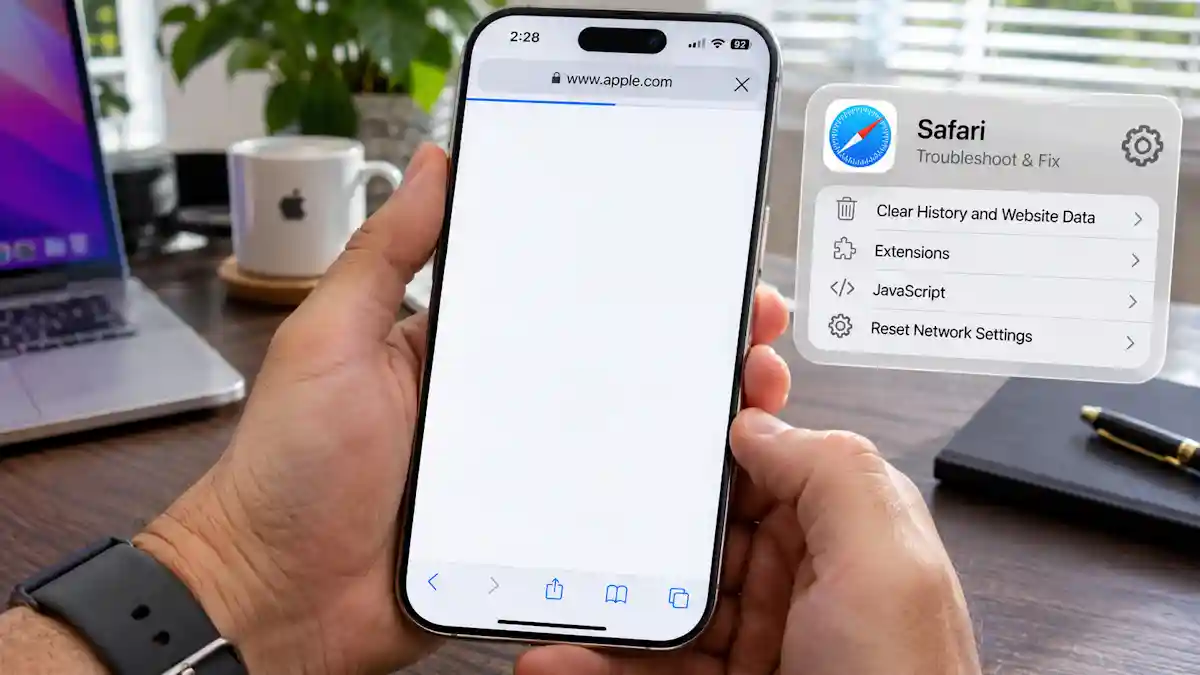
Quick Summary / The 30-Second Fix Execute a rapid iPhone White Screen Safari Fix by navigating to Settings > Apps > Safari > Clear History and Website Data to flush corrupted WebKit cache. If tabs still load blank, reset experimental WebKit Feature Flags or disable broken third-party content blockers.
Works on: iOS 19 & iOS 20 Beta / iPhone 15, 16, 17, 18 Series / Legacy iPhone models (iOS 15–18)
When Safari loads a URL or opens a new tab but displays a completely blank white screen, the underlying Apple WebKit browser engine has stalled due to corrupted local storage, mismatched rendering flags, or faulty ad-blocker rules. You can eliminate this blank page error immediately by clearing your Safari website data, resetting experimental WebKit feature flags to their default state, and turning off conflicting extensions.
| iOS Symptom | Root Cause | 10-Second Fix |
| All websites load a blank white screen | Corrupted WebKit cache and site database | Clear History and Website Data in Safari settings |
| Specific page elements or tabs turn white | Experimental WebKit GPU/Canvas flag crash | Tap Reset All to Defaults in Feature Flags |
| White screen occurs right after page load | Third-party ad blocker or extension conflict | Toggle off all extensions in Safari settings |
| Dynamic web apps fail to render visuals | Frozen client-side script execution loop | Toggle JavaScript off and back on in Advanced settings |
| Blank screen accompanied by stalled loading bar | Corrupt local DNS resolver cache or VPN drop | Reset iPhone Network Settings |
Root Cause Engine: Diagnose Before Applying an iPhone White Screen Safari Fix
Before altering your system configuration, pinpoint why WebKit is failing to paint webpage elements on your screen.
- Open Settings > Privacy & Security > Analytics & Improvements > Analytics Data and search the top bar for
com.apple.WebKit.WebContentorJetsamEventlogs to verify if system memory limits are crashing active Safari tabs. - Check Settings > General > iPhone Storage > Safari and review your Website Data footprint; if it exceeds 1.5 GB, local database bloat is choking new DOM rendering.
- Confirm your OS menu path: iOS 18, iOS 19, and iOS 20 house browser preferences inside Settings > Apps > Safari, whereas legacy devices on iOS 17 or earlier use Settings > Safari.
5 Verified Methods for the iPhone White Screen Safari Fix
Apply these five sequential fixes in order from lowest system impact to full network configuration reset.
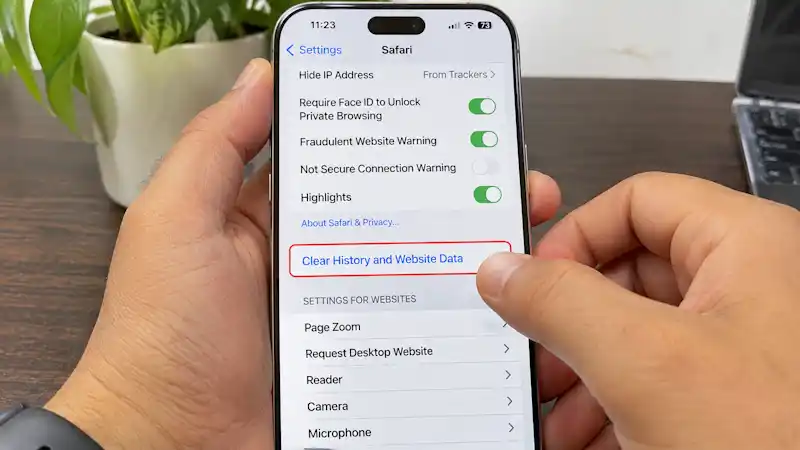
1. Clear Safari History and Website Data
Purging corrupted cookies and broken DOM storage caches is the most reliable primary iPhone White Screen Safari Fix.
- Open the Settings app on your iPhone and tap Apps at the bottom of the list (skip the Apps folder on iOS 17 and older).
- Scroll through the alphabetical menu and tap Safari.
- Follow the official Apple Support guide to clear Safari cache by tapping Clear History and Website Data.
- Choose All History under the timeframe options and toggle on Close All Tabs.
- Tap the red Clear History button to finalize the cache purge.
- Verification: Relaunch Safari and load a previously broken URL to verify the webpage text and media render immediately.
2. Toggle Advanced Experimental WebKit Feature Flags
Major iOS updates often leave experimental WebKit GPU and compositing flags out of sync with live website stylesheets.
- Navigate to Settings > Apps > Safari and scroll down to the bottom of the page.
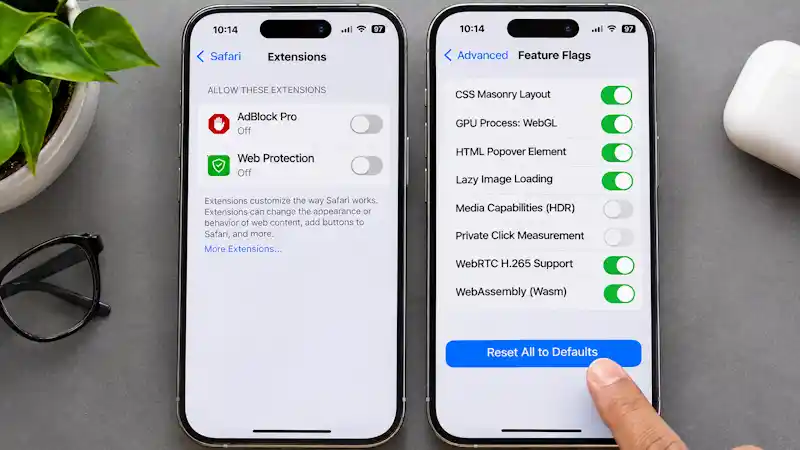
- Tap Advanced, then select Feature Flags (labeled Experimental Features on legacy iOS 15 and iOS 16 builds).
- Scroll to the very bottom of the alphabetized WebKit flag list and tap Reset All to Defaults.
- Force-close Safari by swiping the app card up in the iOS App Switcher.
- Verification: Reopen Safari and launch a fresh tab to confirm hardware-accelerated page canvases paint without sticking on a solid white screen.
3. Disable External Content Blockers and Extensions
Outdated ad blockers and script-injecting extensions frequently block core CSS files by mistake, leaving behind an empty white viewport.
- Go to Settings > Apps > Safari and select Extensions.
- Review your installed add-ons, or check Apple’s documentation on managing Safari extensions on iPhone if an enterprise profile locks these toggles.
- Tap each active content blocker, translation tool, or privacy extension one by one and toggle off Allow Extension.
- Verification: Refresh your blank Safari tab; if the webpage loads properly, turn your extensions back on individually to find the faulty add-on.
4. Disable JavaScript Temporarily to Bypass Broken Scripts
When a specific website hangs on a white screen due to an infinite client-side script loop, disabling JavaScript forces WebKit to render the baseline HTML text.
- Open Settings > Apps > Safari and tap Advanced at the bottom of the menu.
- Toggle the JavaScript switch to the Off position.
- Open Safari and reload the stuck webpage to bypass the frozen script execution.
- Return to Settings > Apps > Safari > Advanced and toggle JavaScript back On once the page loads, since interactive sites require it for normal navigation.
- Verification: Confirm the problematic webpage breaks out of its blank loading state and displays its core article content.
5. Perform a Network Settings Reset to Flush DNS Cache
Safety & Backup Warning: Before resetting network settings, verify that you have a current iCloud or Mac backup and know your Wi-Fi passwords. Executing a Network Settings Reset permanently deletes all saved Wi-Fi networks, paired Bluetooth devices, and custom VPN configurations.
When corrupted DNS records or stalled iCloud Private Relay handshakes block WebKit from reaching external stylesheet servers, a complete network stack flush is necessary.
- Open the Settings app and select General.
- Scroll to the bottom and tap Transfer or Reset iPhone.
- Tap Reset, then choose Reset Network Settings from the pop-up list as outlined in Apple’s network reset instructions.
- Enter your iPhone passcode and tap Reset Network Settings in red to confirm the flush.
- Verification: Wait for your iPhone to restart, reconnect to Wi-Fi, and open Safari to confirm websites resolve and load without blank white screens.

Common Mistakes to Avoid During This Repair
- Leaving Reduce Transparency Enabled on Modern iOS Builds: Activating Settings > Accessibility > Display & Text Size > Reduce Transparency triggers a known WebKit compositing bug that covers half or all of the Safari screen with a solid white block; keep this toggle off when troubleshooting blank tabs.
- Ignoring Active VPN Profiles or iCloud Private Relay: Clearing your browser cache won’t complete an iPhone White Screen Safari Fix if an unstable third-party VPN or Settings > [Your Name] > iCloud > Private Relay is actively dropping packet handshakes in the background.
Frequently Asked Questions (FAQs)
Why does my iPhone Safari show a blank white screen after a 2026 iOS update? An iOS update modifies how Apple’s WebKit engine processes cached website databases and experimental rendering flags. When older site cookies or third-party ad blockers clash with the updated WebKit build, Safari fails to paint the DOM and displays a blank white screen.
Will clearing Safari History and Website Data delete my saved passwords or bookmarks? No, applying the iPhone White Screen Safari Fix via Clear History and Website Data only removes browsing history, site cookies, and local cache files. Your saved bookmarks, Reading List articles, and AutoFill credentials stored in the Apple Passwords app stay completely safe.
How do I fix a Safari white screen if only one specific website is blank? If only a single website displays a white screen, open Settings > Apps > Safari > Privacy & Security and temporarily turn off Prevent Cross-Site Tracking, or pause iCloud Private Relay. Strict tracker blocking occasionally stops login scripts from rendering on banking portals and corporate dashboards.
Why is the Safari setting missing from the main Settings menu on my iPhone? Starting with iOS 18 and continuing across iOS 19 and iOS 20 in 2026, Apple moved all default and third-party app preferences into a dedicated Apps section at the bottom of the main Settings menu. You must go to Settings > Apps > Safari instead of scrolling through the main Settings screen.